Growing Community from the Ground Up: Inside Urban REAP at Mission Waco
Growing Community from the Ground Up: Inside Urban REAP at Mission Waco
May 4, 2026
I recently had the opportunity to speak with Urban REAP Program Director Emily Hills about her work and journey to Mission Waco. “I grew up here in Waco,” she shares. “I left as soon as I graduated high school.” Her career took her through environmental education, community engagement, and agriculture, experiences that, at the time, may not have seemed connected. But when she returned to Waco for what she thought would be a brief stop, everything began to align.

Urban REAP didn’t exist when she was growing up, but once she discovered it, she quickly got involved as a volunteer. Not long after, the director role opened and unexpectedly, her diverse background made her the perfect fit. “It felt like a self-fulfilling prophecy,” she says. “The job description matched my resume perfectly, but I’ve also shaped the role into what it is now.” Five years later, she continues to lead and grow the program in ways that reflect both its mission and the needs of the community it serves.
Since stepping into the director role, Emily has helped transform Urban REAP in meaningful and visible ways. When she first started, she was the only full-time staff member. Today, the team has expanded to include two full-time staff, one part-time staff member, and a rotating group of interns each semester. This growth has allowed the organization to expand programming, strengthen operations, and increase overall quality. The garden center itself has become more polished and professional, with the addition of a shade structure that Emily describes as a “game changer.” New products have been introduced, systems refined, and partnerships expanded.
Collaborations with institutions like Baylor University and McLennan Community College have further strengthened both educational opportunities and community impact, particularly in areas like food systems and composting. “It’s not just about adding things,” she explains. “It’s about building capacity and doing what we already do, but better.”
Urban REAP is currently in the middle of a five-year strategic planning process. This includes community surveys, one-on-one interviews, and internal evaluations, all centered around one key question: What does the community need most, and how can we meet it? “I have ideas,” Emily says, “but I want our direction to be guided by the people we serve.” The goal is to become a more recognizable and trusted presence in Waco while remaining deeply rooted in community needs. At its core, Urban REAP operates under a simple but powerful idea: loving our neighbor by loving our earth.
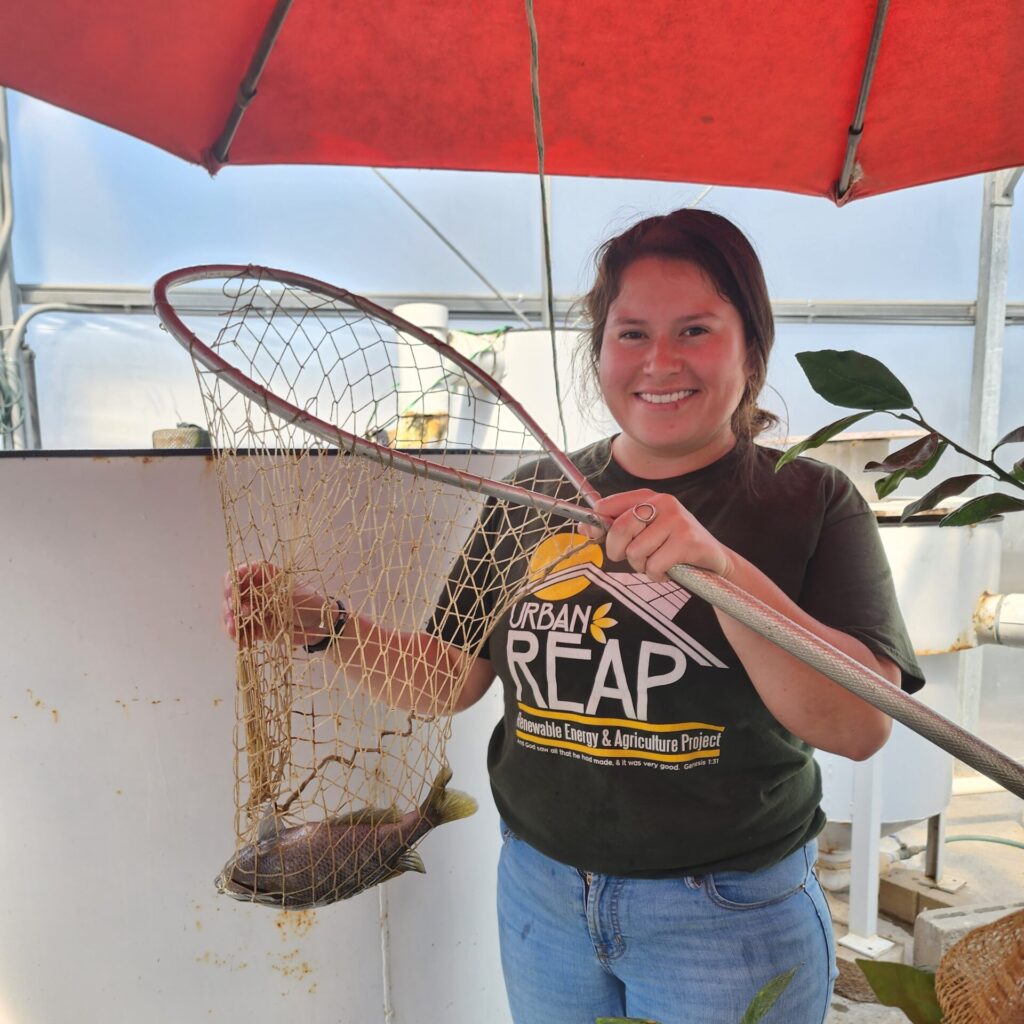
Urban REAP lives out this calling daily. Through gardening, composting, education, and presence, they are cultivating more than plants. They are nurturing relationships, restoring dignity, and planting seeds of hope across their community. This mission connects environmental work directly to human well-being. Access to healthy food, clean environments, and green spaces is not evenly distributed, and the consequences are significant. In Waco, life expectancy can vary by as much as 15 years between neighborhoods, shaped in part by environmental conditions. “We often think about the environment in terms of polar bears,” Emily says. “But we should be thinking about our neighbors.” Caring for the earth, in this context, becomes a way of caring for people, especially those most affected by environmental challenges:
Isaiah 42:5 reflects this calling:
“Thus says God, the Lord, who created the heavens and stretched them out, who spread out the earth and what comes from it, who gives breath to the people upon it and spirit to those who walk in it.”
This verse reminds us of the responsibility we carry to steward the earth well and to care for the people who depend on it. We can apply this idea to our life as Christians by letting it shape how we see our responsibility to God, people, and creation. Caring for the environment isn’t separate from faith; it’s part of honoring what God has made. A Christian life, then, includes paying attention to how our habits affect the world around us such as our waste, consumption, and care for natural resources become spiritual matters, not just practical ones. When environmental conditions affect our neighbors health, food access, and life expectancy, then caring for people means addressing those realities that we partake in. Urban REAP’s work shows that transformation happens through consistent, local engagement. For a Christian, this might mean showing up regularly in your community by volunteering, building relationships, or simply being attentive to the needs around you instead of thinking of “missions” as something far away.
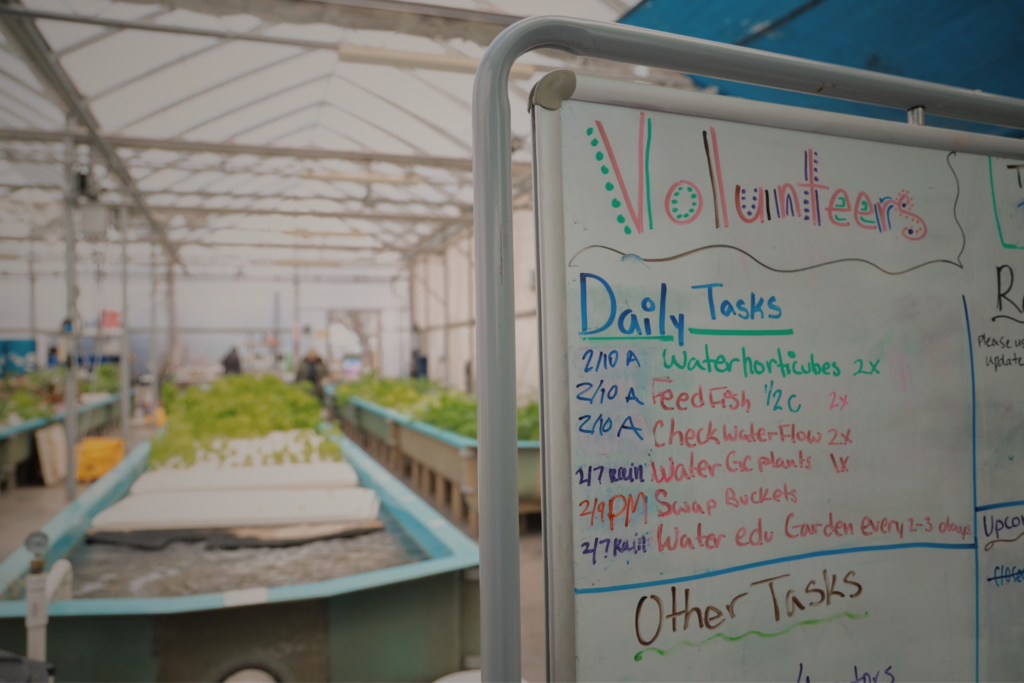
Some simple ways YOU can get involved at Urban REAP:
- Shop at the garden center
- Join the compost program
- Volunteer regularly
- Apply for an internship
“We love one-time volunteers,” Emily says, “but consistent volunteers are invaluable. That’s when people really become part of the team.” Urban REAP isn’t just growing plants, it’s cultivating relationships, resilience, and a vision for a healthier, more connected community, one plant at a time. Urban REAP is a reminder that God often works from the ground up; through small seeds, steady hands, and willing hearts. Not everyone is called to lead an organization, but everyone can participate in small, meaningful ways: supporting local efforts, reducing waste, volunteering time, or choosing to invest in initiatives that bring life to others. These acts, while ordinary, reflect a deeper commitment to God’s kingdom. How can you apply Urban REAP’s mission towards how you say yes to how God is calling you to care for creation and people in your community? Maybe you can start small by composting at home, fundraising for a community garden at your church, or just by planting some extra flowers in your back yard.
To learn more about Urban REAP’s services, produce, and programs, visit their website: https://missionwaco.org/urban-reap/